
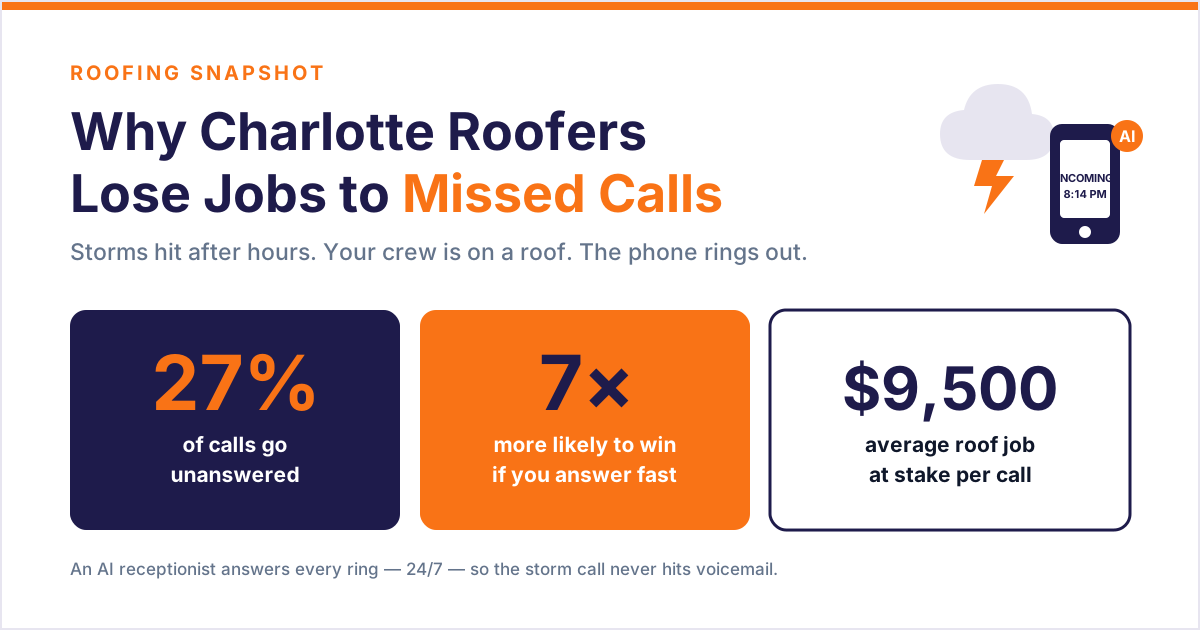
Why do Charlotte roofing companies keep losing storm jobs they already paid to generate? Because the phone rings while the crew is on a roof — and roughly 1 in 4 of those calls never gets answered. In home services, about 27% of inbound calls go unanswered (Invoca, 2024), and a roofer who lets a storm call go to voicemail is usually handing a five-figure job to whichever competitor picks up first. An AI receptionist fixes exactly that gap: it answers every call 24/7, qualifies the homeowner, and books the inspection — even at 8 PM on a Saturday after a hail cell rolls through Mecklenburg County.
This is a problem baked into how roofing works in Charlotte. Demand spikes in bursts after severe weather, it spikes after hours, and it spikes at the precise moment your best people are least able to grab the phone. This guide breaks down what a missed call actually costs a Charlotte roofer, why the “just call them back tomorrow” plan quietly bleeds revenue, and how a roofing-trained AI receptionist closes the hole — written for the NC roofing owner who’d rather be closing deductibles than chasing voicemails, and for the GHL agency serving roofing clients across the Carolinas.
Key Takeaways
- ~27% of inbound calls to home-services businesses go unanswered (Invoca, 2024) — and roofing is worse than average because crews are on roofs when storm calls come in.
- Roofers who respond within an hour are ~7× more likely to qualify a lead than those who wait even 60 minutes longer, yet the average business takes ~42 hours and 23% never respond at all (Harvard Business Review, 2011).
- The average roof replacement runs about $9,500 (typical range ~$5,900–$13,400) (Angi, 2025–2026) — so a single unanswered ring can be a five-figure job walking to a competitor.
- Charlotte sits in an active Southeast hail corridor — an April 20, 2024 outbreak dropped hail up to 4.5” across the Carolinas, including 4.0” in Rock Hill on Charlotte’s southern edge (NOAA / National Weather Service) — and storms hit late-day and on weekends, exactly when the office is dark.
- 58% of U.S. small businesses now use AI, up from 40% in 2024 (U.S. Chamber of Commerce, 2025) — an AI receptionist is no longer early-adopter tech; it’s how the roofer down the street already answers your missed calls.
Table of contents
- The short answer for Charlotte roofers
- Why Charlotte roofers miss so many calls
- The real math of one missed call
- Speed-to-lead: the first roofer to answer signs the roof
- What an AI receptionist actually does for a roofer
- Why Charlotte roofers are adopting AI now
- AI receptionist vs. the alternatives
- FAQ
The short answer for Charlotte roofers
A missed call in roofing isn’t a missed call — it’s a lost job you already paid to earn. You spent money on the Google ad, the Local Services listing, the yard sign, or the door-knock route that made that phone ring. When it goes unanswered, that spend is gone and the homeowner is now on the phone with the next roofer on the list.
The uncomfortable part is that this happens most during your best weeks. A Charlotte hail event doesn’t send leads in evenly — it dumps a month of demand into 48 hours, mostly after 5 PM, while your crews are still finishing tear-offs. That’s the exact window where a human answering plan fails and an AI receptionist earns its keep: it never goes to lunch, never gets stuck on a roof, and never lets a storm lead hit voicemail.
Why Charlotte roofers miss so many calls
Three forces stack up against a roofing company’s phone, and Charlotte hits all three hard.
1. Your best people can’t answer — they’re on a roof. The industry-wide miss rate is about 27% of inbound calls (Invoca, 2024), and roofing runs worse than the average retail counter because the person most qualified to talk hail damage is 20 feet in the air with a nail gun. Every ring that comes in during a tear-off is a coin flip.
2. Storm demand is bursty and it lands after hours. Charlotte is squarely inside an active Southeast severe-weather corridor. On April 20, 2024, an outbreak across the Carolinas produced hail up to 4.5 inches in Lumberton and 4.0 inches in Rock Hill — right on Charlotte’s southern edge — with 70–90 mph winds, the most significant large-hail event in the region since May 2021 (NOAA / NWS). The pattern repeated on May 8, 2025, when the NWS logged 33 hail reports concentrated west of I-77 through the Charlotte corridor (WCNC). These cells fire in the late afternoon and evening — homeowners start dialing roofers right as your office closes.
3. Nobody responds fast enough — even when they do call back. The landmark Harvard Business Review study of 2,241 U.S. companies found the average firm took ~42 hours to respond to an inbound lead, and 23% never responded at all. Roofing lives and dies on being first, and “first” is measured in minutes, not days.
The real math of one missed call
Roofers underrate missed calls because a single ring feels cheap. Run the numbers and it isn’t. On one side of the ledger is what you paid to make the phone ring; on the other is the job you lose when nobody answers.
The average roof replacement runs about $9,500, typically $5,900–$13,400 (Angi, 2025–2026). Invoca puts the revenue cost of a single missed call to a home-services business at roughly $1,200 on average, before you even count the homeowner’s lifetime value or the referrals a happy customer sends (Invoca, 2024). Miss two storm calls a week and you’re not losing a phone call — you’re losing the equivalent of a truck payment, every week, on jobs you’d already paid to attract. For the full breakdown of what a roofing lead really costs to buy, see how much a roofing lead costs.
Speed-to-lead: the first roofer to answer signs the roof
Answering isn’t just about not losing the call — it’s about being first, because in roofing the first credible contact usually wins. The Harvard Business Review analysis found companies that reached a lead within an hour were nearly 7× more likely to qualify it than those that waited just 60 minutes longer (HBR, 2011). Push the window tighter and the effect is dramatic: the MIT-backed Lead Response Management study found that contacting a lead within 5 minutes makes you about 21× more likely to qualify them than waiting 30 minutes.
An AI receptionist collapses that window to zero. It picks up on the second ring, day or night, so your response time isn’t 42 hours or even 5 minutes — it’s instant, on every single call, without you thinking about it. That’s the same reason we harp on lead response time and on never missing an after-hours storm call: speed is the highest-leverage number in a roofing business, and automation is the only way to win it consistently.
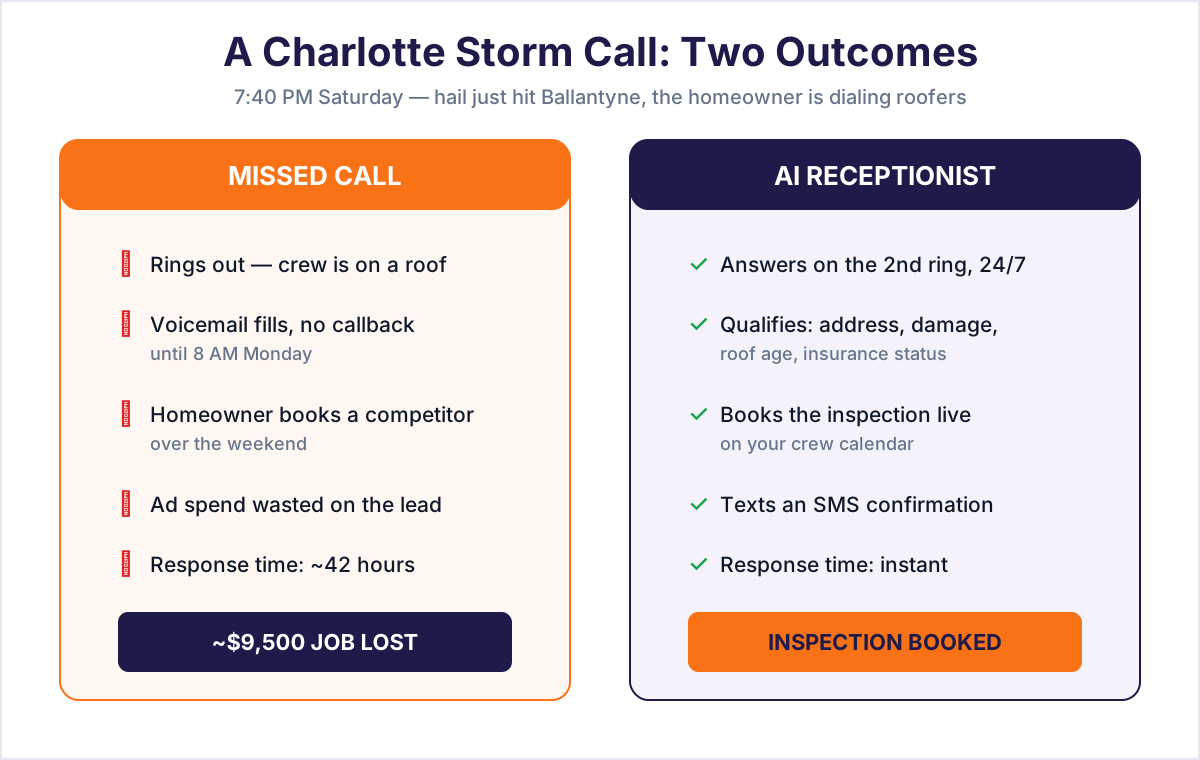
A Saturday-evening hail call in Charlotte
Phone rings at 7:40 PM after a hail cell hits Ballantyne. Crew is loading up, nobody answers. Voicemail fills. Owner calls back Monday at 8 AM — the homeowner already booked two inspections over the weekend.
Phone rings at 7:40 PM. AI receptionist answers on the second ring, captures the address and hail damage, confirms it's a full replacement worth chasing, and books a Tuesday 10 AM inspection. Owner sees the booked job on their phone before they leave the driveway.
What an AI receptionist actually does for a roofer
A roofing AI receptionist is not a generic “press 1 for sales” robot. Configured against real roofing call patterns, the AI Caller in the snapshot does the job a great front-desk rep would — it just never sleeps:
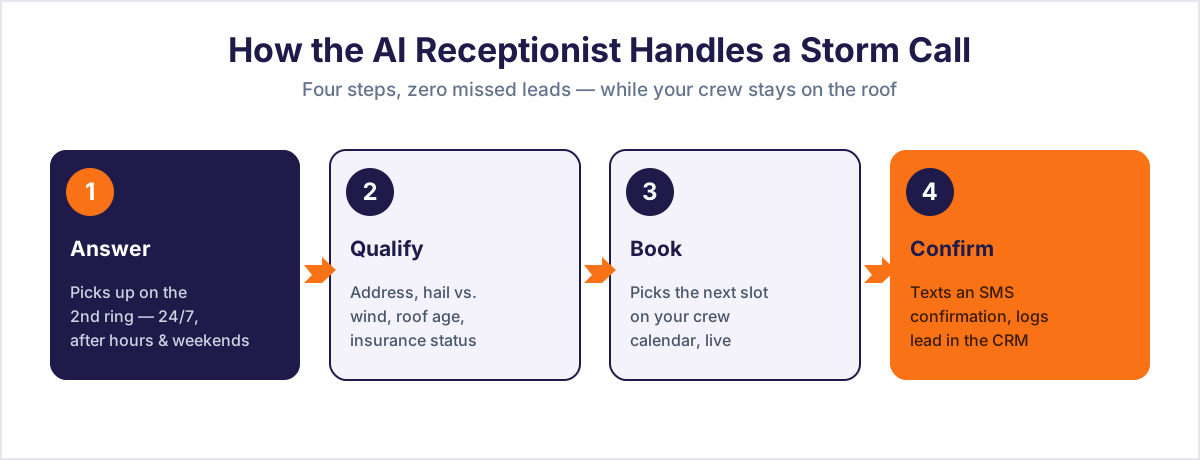
- Answers 24/7 — after-hours, weekends, and overflow. No storm-lead voicemail ever sits until morning.
- Qualifies the homeowner the way you would: property address, age and type of roof, shingle vs. metal, hail vs. wind, insurance vs. cash, and urgency.
- Books the inspection live on the call — checks your crew calendar, picks the next open slot, and fires an SMS confirmation.
- Texts back if the caller hangs up before booking, so the lead never goes cold — the same 30-second SMS speed-to-lead your best salesperson wishes they had time for.
- Routes and logs everything into your CRM, dropping the contact straight into the storm pipeline with the damage notes attached.
- Hands off cleanly to a human whenever the homeowner asks — no awkward loop, no dead ends.
Why Charlotte roofers are adopting AI now
Two years ago, an AI receptionist was a novelty. Today it’s mainstream small-business infrastructure — and your competitors are already using it to answer the calls you miss.
58% of U.S. small businesses now use AI, up from 40% in 2024 (U.S. Chamber of Commerce, 2025) — more than double the 2023 figure. The practical takeaway for a Charlotte roofer: this is table stakes now, not a differentiator. The roofers still relying on “we’ll catch it in the morning” are competing against companies whose phone is answered on the second ring at midnight. And once the AI books the inspection, the same automation keeps the job from stalling — reminders that cut inspection no-shows and a chat widget that catches the homeowners who’d rather text than call.
AI receptionist vs. the alternatives
Roofers have tried to plug the missed-call hole three ways. Here’s how they stack up against an AI receptionist for a storm-driven Charlotte roofing business.
| Approach | Answers after hours? | Books inspections? | Cost | The catch |
|---|---|---|---|---|
| Voicemail | “Answers,” never returns | No | Free | ~1 in 4 calls already unanswered; homeowners rarely wait for a callback |
| Human answering service | Sometimes | Rarely | ~$1–2 per minute + monthly | Generic operators can’t qualify hail vs. wind or book on your crew calendar |
| Hire a front-desk rep | No (9–5 only) | Yes | $3,000+/mo loaded | Off nights and weekends — exactly when storm calls come in |
| AI receptionist (snapshot) | Always | Yes, live on the call | Flat, far below a salaried hire | Needs a one-time setup tuned to your roofing intake |
The point isn’t that humans are bad — it’s that storm demand is 24/7 and bursty, and only automation answers every call without a payroll line that scales with your worst week. Most Charlotte roofers run the AI receptionist as the always-on front line and keep a human (or a GHL VA) for the conversations that need one.
The bottom line
In Charlotte roofing, the call you miss is the roof you lose. The storms come after hours, the demand comes in bursts, and your best closers are on a roof when the phone rings — so about a quarter of your hard-won calls hit voicemail and walk to a competitor who answered first. An AI receptionist isn’t about chasing shiny tech; it’s the cheapest, most reliable way to make sure your company is always the one that picks up. Answer every ring, book every qualified inspection, and let the storm work come to the roofer who was there at 8 PM on a Saturday — you.
Frequently asked questions
How much does a Charlotte roofer really lose from a missed call?
Invoca estimates a single missed call to a home-services business costs about $1,200 in lost revenue on average — and in roofing the ceiling is far higher, because the average roof replacement runs about $9,500 (Angi, 2025–2026). One unanswered storm call can be a five-figure job that you already paid to generate walking to a competitor.
Will an AI receptionist sound robotic to a homeowner?
A roofing-tuned AI receptionist talks like a trained intake rep — it captures the address, roof age, hail-vs-wind damage, and insurance status, and books the inspection. It hands off to a human the moment the caller asks, so there's no awkward loop. The goal is a booked, qualified inspection, not a tech demo.
Does it work after hours and on weekends?
That's the whole point. Charlotte hail cells typically fire in the late afternoon and evening (the April 2024 and May 2025 Carolina outbreaks are documented by the NWS), and homeowners dial roofers right as offices close. The AI receptionist answers 24/7, so the after-hours storm surge never hits voicemail.
How is this different from a normal answering service?
A generic answering service takes a message; it can't qualify hail vs. wind damage, check your crew calendar, or drop the lead into your CRM's storm pipeline. The AI receptionist in the snapshot does all three, live on the call, and texts the homeowner back if they hang up before booking.
How fast can we get it running?
The AI receptionist ships as part of the GoHighLevel roofing snapshot, which installs and goes live in about 24 hours once we have access. Book a free demo and we'll show it answering a real storm call tuned to your business before you decide.
Written by Dale Rourke, Roofing Operations Strategist (Oklahoma City, OK). Dale spent eleven years running crews and the sales board for a storm-restoration outfit in Tornado Alley before moving full-time into GoHighLevel automation. He writes about speed-to-lead, storm-chase capture, and the workflows that decide who signs the roof first.
Related posts
- Why a 30-second response wins storm jobs — the highest-leverage number in your business.
- How to never miss another after-hours storm call — the full after-hours automation playbook.
- How much does a roofing lead cost? — what you’re really paying per ring.
- Cut roofing inspection no-shows — keep the booked job from stalling.